
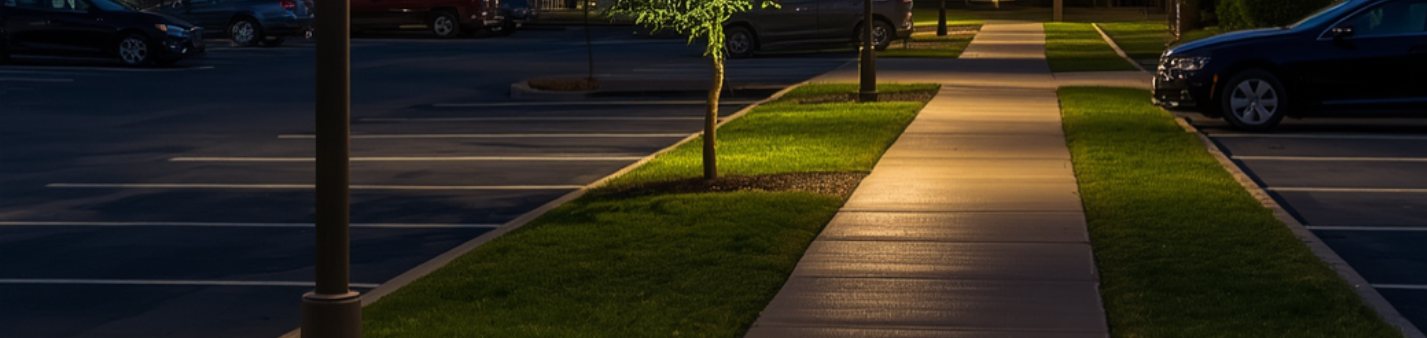
Part of the Insurance Warehouse HOA Risk Management Series: five short guides for association boards and property managers. A printable one-page version is at the end of the article.
Adequate lighting means enough light for a person to safely do what they are there to do: walk to a car at night, climb a stairwell, find a unit entry, or read a sign. When lighting falls short, slips, falls, break-ins and vehicle accidents all become more likely, and the association’s share of the blame grows with them.
Why it matters
- Poor lighting is a common thread in premises claims. Someone misses a curb, a step or a pothole they would have seen in daylight.
- Dark corners and unlit landscaping give people with bad intentions a place to wait. Millions of crimes a year happen in parking lots.
- Residents notice. A well-lit property feels safer, shows better, and supports property values.
Where lighting is needed most
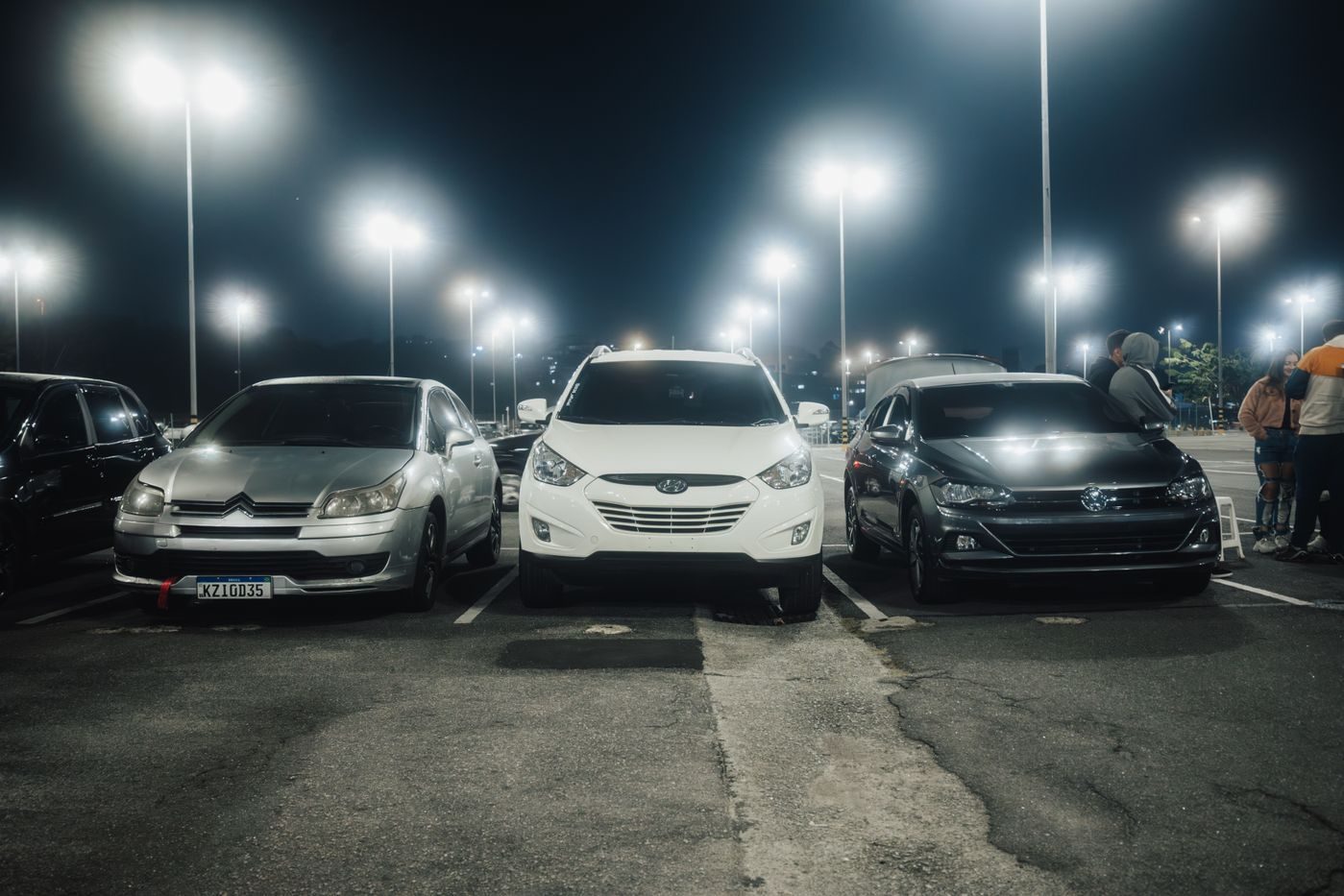
- Parking lots and garages. Poor lighting hides cracks, wheel stops, curbs and oncoming vehicles, and makes it hard to judge distance.
- Stairways, interior and exterior. Dim stairs make it hard to judge step height and depth, which leads to bad falls.
- Landscaped areas and shrubbery along walkways, entries and building corners, where concealment is the risk.
- Building entries, mail areas, trash enclosures, corridors and elevators.
Lighting checklist
A simple habit
Add a night walk to the monthly inspection. It takes fifteen minutes and catches most lighting problems before a resident or a claim does.